
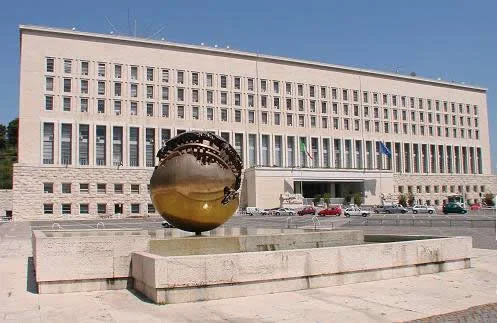
Ministry of Foreign Affairs and International Cooperation
Worldwide monitoring of the servers of the Worldwide Visa Network (Schengen project).
Project overview
| Customer | Ministry of Foreign Affairs and International Cooperation |
| Objective | Monitoring of the servers belonging to the Worldwide Visa Network (Schengen project) |
| Technology area | Networking |
| Results | Improved intervention and recovery times, reduced monitoring costs, greater control of the entire technology infrastructure |
A network that must communicate without interruption
The provisions of the Worldwide Visa Network agreement establish:
- the abolition of checks at the internal borders of the States belonging to the Schengen area;
- common rules on checks at the external borders.
The most visible consequence for people is that they no longer need to show their passport when crossing the borders between Schengen member States, although each member State decides whether a person must carry a travel or identity document.
Applying these provisions requires close cooperation between all Schengen members and, within each country, between institutional bodies such as the Ministry of Foreign Affairs, the Ministry of the Interior and the Ministry of Justice. All of this relies on a dense network of servers that complies with strict communication and security rules, to ensure immediate exchange between all the parties involved.
More than 200 servers worldwide, under a single control
The system is a complex structure: an operations centre at the Ministry of Foreign Affairs, with many servers dedicated to delivering the central services, interconnected with the Ministries of the Interior and of Justice, with the administrations of the other member States and with Italian Embassies and Consulates abroad. In total, more than 200 servers distributed across every continent.
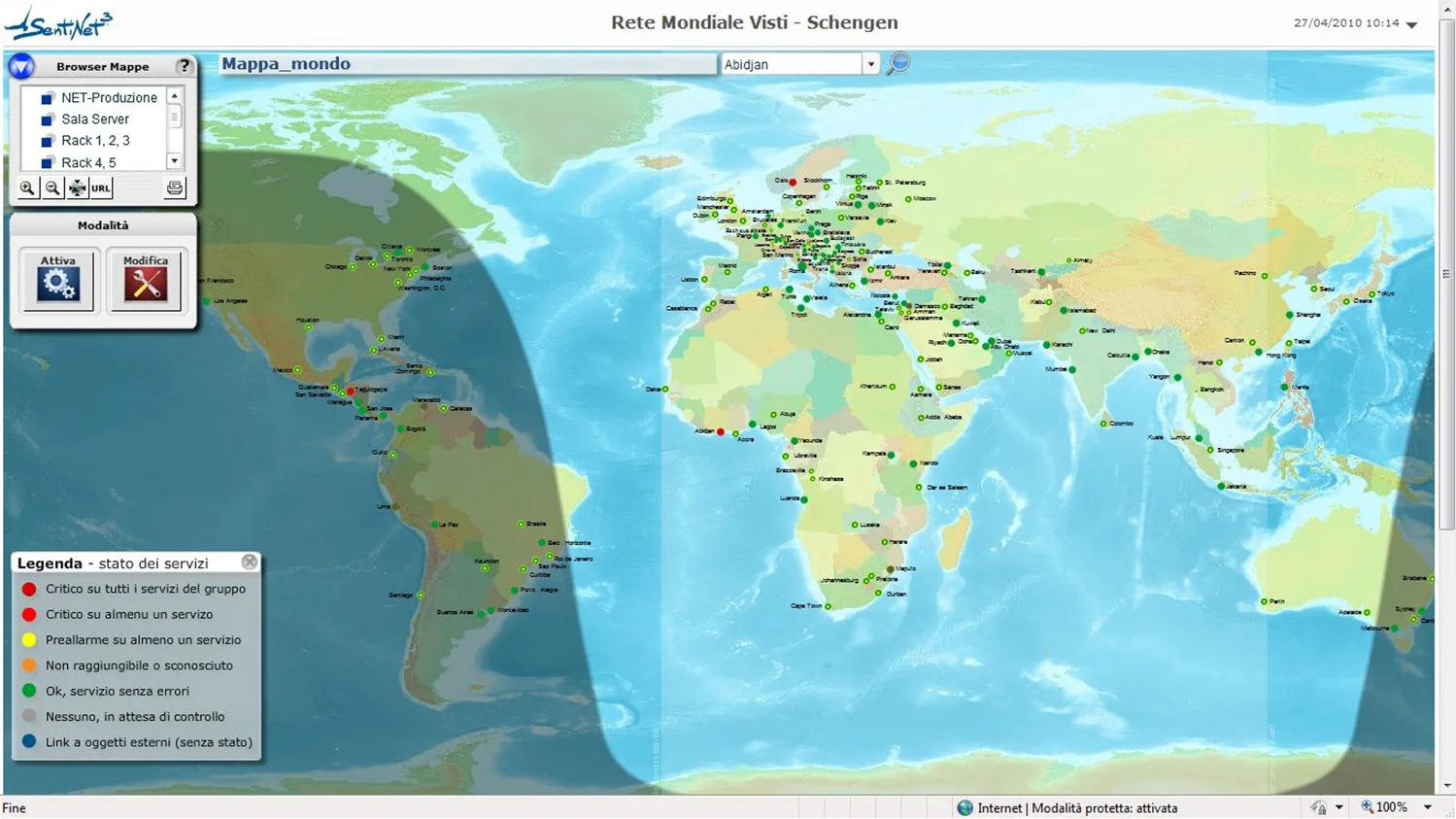
Sentinet³ controls this network by monitoring both the status of the connections and active services and the trend over time of activities and resources. This makes it possible to assess, statistically as well, the activity of the individual systems and of the global system as a whole.

Benefits for the customer
- Fault prevention: thanks to extensive worldwide control of the devices, the Ministry has prevented fault situations and improved the uptime of the services involved.
- Fast start-up: deployment times were extremely short and a few days after delivery the system was already in operation.
- Support activated sooner: real-time notifications by email and SMS have made activating technical support faster, reducing service downtime.
- Worldwide view of the service: with the maps the Ministry has an immediate perception of the service status, also thanks to a video wall that projects the world map with the status of the remote sites.
- Optimised resources: alerting and proactive actions have improved response and problem resolution times, optimising the resources dedicated to these activities.
Sentinet³ features in this project
More success stories
Want to see Sentinet³ on your infrastructure?
Tell us about your environment: sites, technologies, critical services. We will show you how Core and Infinity can work on your case.